
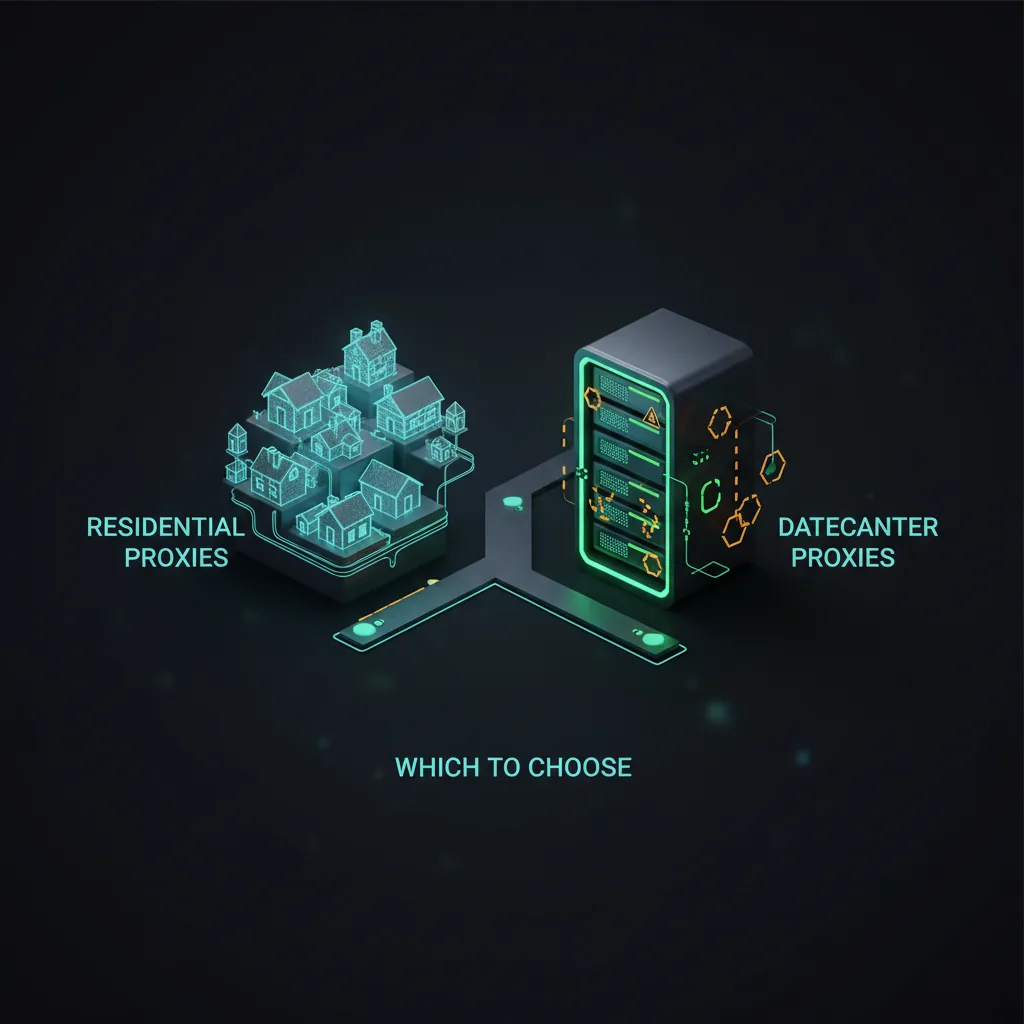
Residential Proxies
Residential proxies route your traffic through real home internet connections, so to a website you look like an ordinary person browsing from their living room. That authenticity is their main strength.
Characteristics
- Real IP addresses from ISPs (internet service providers — the companies that give homes their internet)
- Associated with actual devices
- Higher success rates
- Better for avoiding blocks
- More expensive
- Slower than datacenter proxies
- Geographically diverse
- More legitimate looking
Use Cases
The example below rotates through a pool of residential proxies, picking the next one for each request and retrying up to three times if a request fails:
class ResidentialProxyManager:
    def __init__(self, proxy_pool):
        self.proxies = proxy_pool
        self.current = 0
        self.success_rates = {}

    def get_next_proxy(self):
        proxy = self.proxies[self.current]
        self.current = (self.current + 1) % len(self.proxies)
        return {
            'http': f'http://{proxy}',
            'https': f'http://{proxy}'
        }

    async def make_request(self, url):
        for _ in range(3):  # Retry mechanism
            proxy = self.get_next_proxy()
            try:
                async with aiohttp.ClientSession() as session:
                    async with session.get(url, proxy=proxy, timeout=30) as response:
                        if response.status == 200:
                            self.update_success_rate(proxy, True)
                            return await response.text()
            except Exception as e:
                self.update_success_rate(proxy, False)
                continue
        raise Exception('All proxy attempts failed')
Datacenter Proxies
Datacenter proxies use IP addresses from cloud servers. They are fast and cheap, but because thousands of them come from the same hosting companies, websites recognise them as non-human traffic and block them more readily.
Characteristics
- Cloud-based IP addresses
- Faster response times
- More likely to be blocked
- Less expensive
- Easier to detect
- Better for high-volume scraping
- Limited geographic diversity
- More suitable for non-sensitive targets
Implementation Example
This rotator cycles endlessly through a proxy list, skips any that have been banned, and refreshes the whole list once more than half are banned:
class DatacenterProxyRotator:
    def __init__(self, proxy_list):
        self.proxies = cycle(proxy_list)
        self.banned_proxies = set()
        self.timeout = 10

    def get_proxy(self):
        while True:
            proxy = next(self.proxies)
            if proxy not in self.banned_proxies:
                return proxy

    def mark_banned(self, proxy):
        self.banned_proxies.add(proxy)
        # Remove if too many banned
        if len(self.banned_proxies) > len(self.proxies) * 0.5:
            self.refresh_proxies()
Choosing the Right Type
The right choice comes down to a trade-off: residential proxies cost more but get blocked less, while datacenter proxies are cheaper and faster but easier to detect. Use the matrix below to decide.
Decision Matrix
Choose Residential When:
- Scraping sensitive websites
- Need high success rates
- Geographic targeting important
- Budget allows for higher costs
Choose Datacenter When:
- Speed is priority
- Scraping non-sensitive sites
- Large volume of requests needed
- Cost-effectiveness required
Implementation Strategy
A practical approach is to use both: send sensitive targets (like ecommerce sites) through residential proxies and everything else through cheaper datacenter ones. The manager below picks the proxy type based on the kind of site:
class HybridProxyManager:
    def __init__(self):
        self.residential = ResidentialProxyPool()
        self.datacenter = DatacenterProxyPool()
        self.site_categories = {
            'ecommerce': 'residential',
            'public_data': 'datacenter'
        }

    async def get_proxy_for_site(self, url, site_type):
        if self.site_categories.get(site_type) == 'residential':
            return await self.residential.get_proxy()
        return await self.datacenter.get_proxy()
Remember: Choose proxy type based on your specific needs, target websites, and budget constraints.