Your competitor-price spreadsheet is full, yet the next pricing decision remains unclear. One seller discounts a different pack size, another shows a members-only offer, and your merchandising team must decide whether matching either price protects revenue or cuts margin. Pricing data is easy to collect and hard to act on when records do not describe comparable products or connect to your selling rules.
The right pricing analysis software depends on the job: competitor alerts, retail price optimization, or guidance for negotiated deals. Each requires different data and implementation work. A storefront selling published prices has different needs from a distributor managing customer-specific contracts.
- Self-service e-commerce monitors focus on competitor tracking, alerts, and accessible setup.
- Enterprise retail platforms add broader product matching, market coverage, optimization, and operational controls.
- B2B pricing systems analyze transactions, customer segments, negotiated prices, and sales approvals.
Inventory-driven pricing and competitor-led pricing solve different problems. Yield management explained for travel managers describes the inventory-focused approach, which is distinct from tracking rivals' prices.
Compare tools by data delivery, pricing transparency, and the work required to implement them. Published plans help with initial budgeting, but product matching, refresh frequency, API access, and internal maintenance affect whether the cost produces usable decisions. Choose based on your selling model, not the longest feature list.
1. Prisync
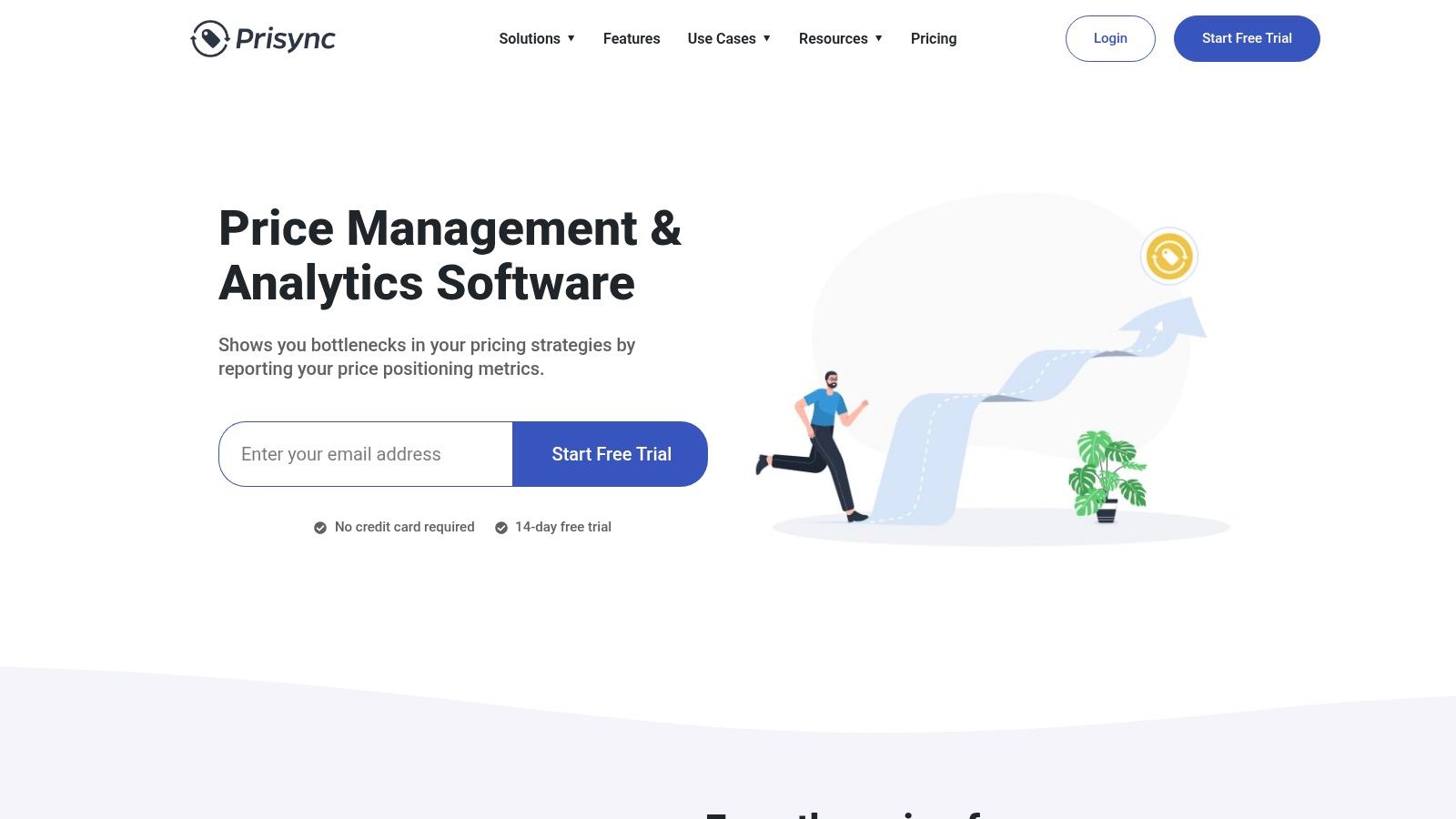
Prisync suits e-commerce teams that want managed competitor monitoring without commissioning an enterprise pricing project. Prisync's price-management software brings competitor prices and availability into dashboards, reports, and alerts, with repricing and additional monitoring capabilities available by plan.
Its URL-based, channel-based, and hybrid approaches address different collection needs. Tracking known product pages gives you control over the comparison set, while channel-oriented monitoring can suit teams whose competition extends beyond a maintained URL list.
Where the Budget Can Expand
- Published plans: Entry-level pricing makes initial budgeting easier, but catalog limits still matter.
- Additional capabilities: API access costs extra, while repricing and variant monitoring depend on the selected package.
- Operational ownership: Someone still needs to approve matches, investigate unexpected movements, and maintain pricing rules.
The practical attraction is convenience: a merchandising analyst can work from reports instead of maintaining extraction scripts. The trade-off is less control over collection behavior and a subscription that can expand as your monitoring scope grows.
Before committing, test products with variants, temporary discounts, and unavailable stock. Ask whether exports preserve observation timestamps and whether unavailable pages remain distinguishable from unavailable products.
For teams weighing a managed service against an internal pipeline, this practical guide to building competitor price-monitoring software helps separate collection engineering from the analysis work Prisync handles.
2. Price2Spy
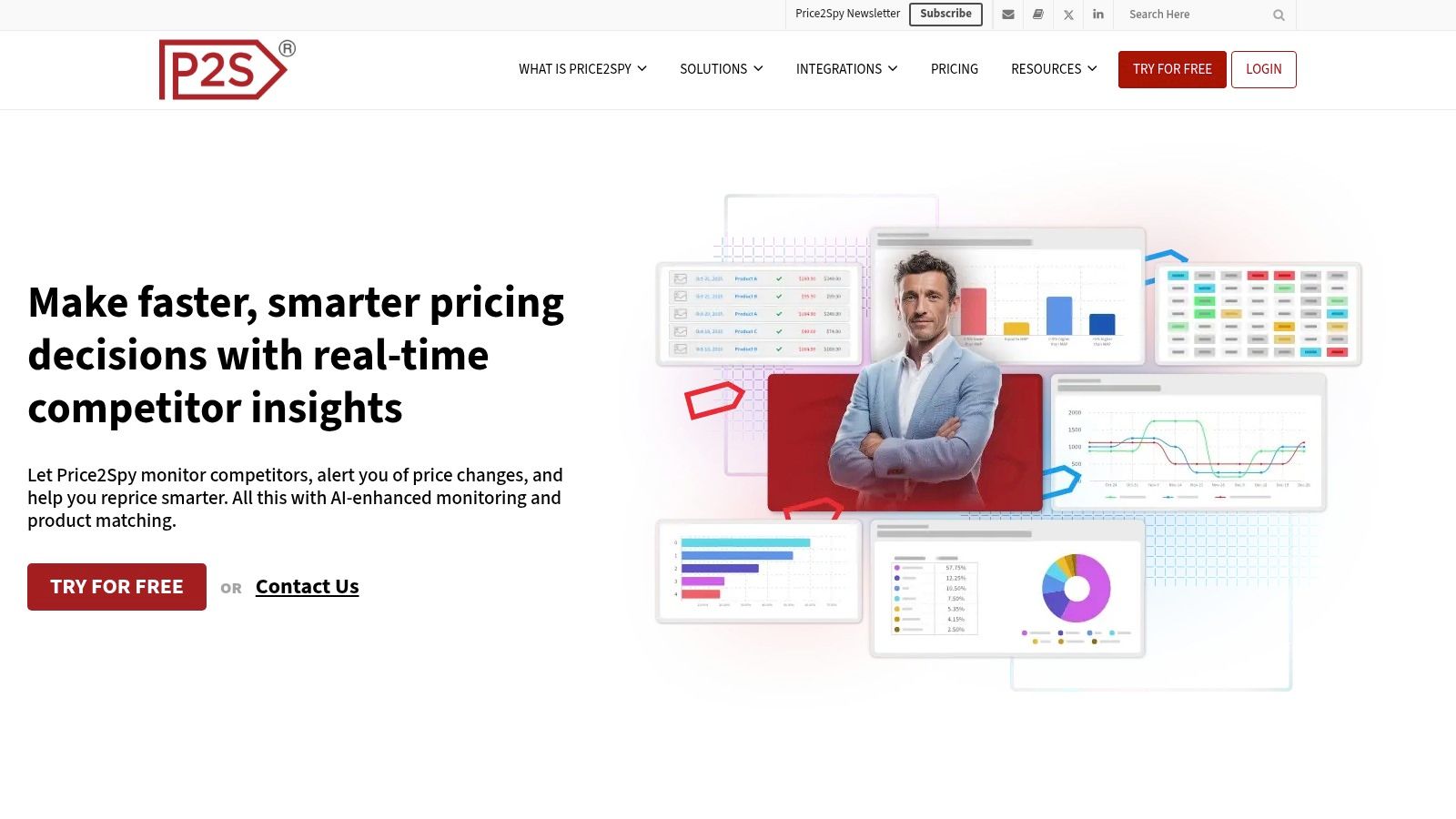
A competitor's headline price doesn't always explain the offer. Shipping, seller identity, and availability can change whether an apparent undercut is commercially meaningful.
Price2Spy is worth evaluating when you need those product-page details alongside historical price reporting, alerts, and competitor comparisons. It also offers product-matching approaches and optional repricing, rather than assuming every buyer wants automatic price execution.
Practical rule: Don't approve a match merely because the product titles resemble each other. Check pack size, variant, condition, and seller before letting that observation influence pricing.
Manual, automated, and hybrid matching provide flexibility, but they don't eliminate catalog work. Buyers may still need to supply competitor URLs, configure matches, and resolve ambiguous products.
MAP monitoring with screenshots is useful when brand teams need evidence of advertised-price exceptions rather than only a dashboard flag. Confirm that captured evidence includes enough context to distinguish a public promotion from a seller-specific or conditional offer.
The commercial question is what your chosen package includes. Monitoring frequency, API access, matching services, and repricing can change the scope, so compare quotes against the same requirements rather than comparing subscription labels.
Price2Spy is a stronger fit for monitoring and investigation than for a buyer whose primary goal is demand modeling. Use its trial to test difficult pages and report usability, not just whether familiar products appear in the dashboard.
3. Pricefy
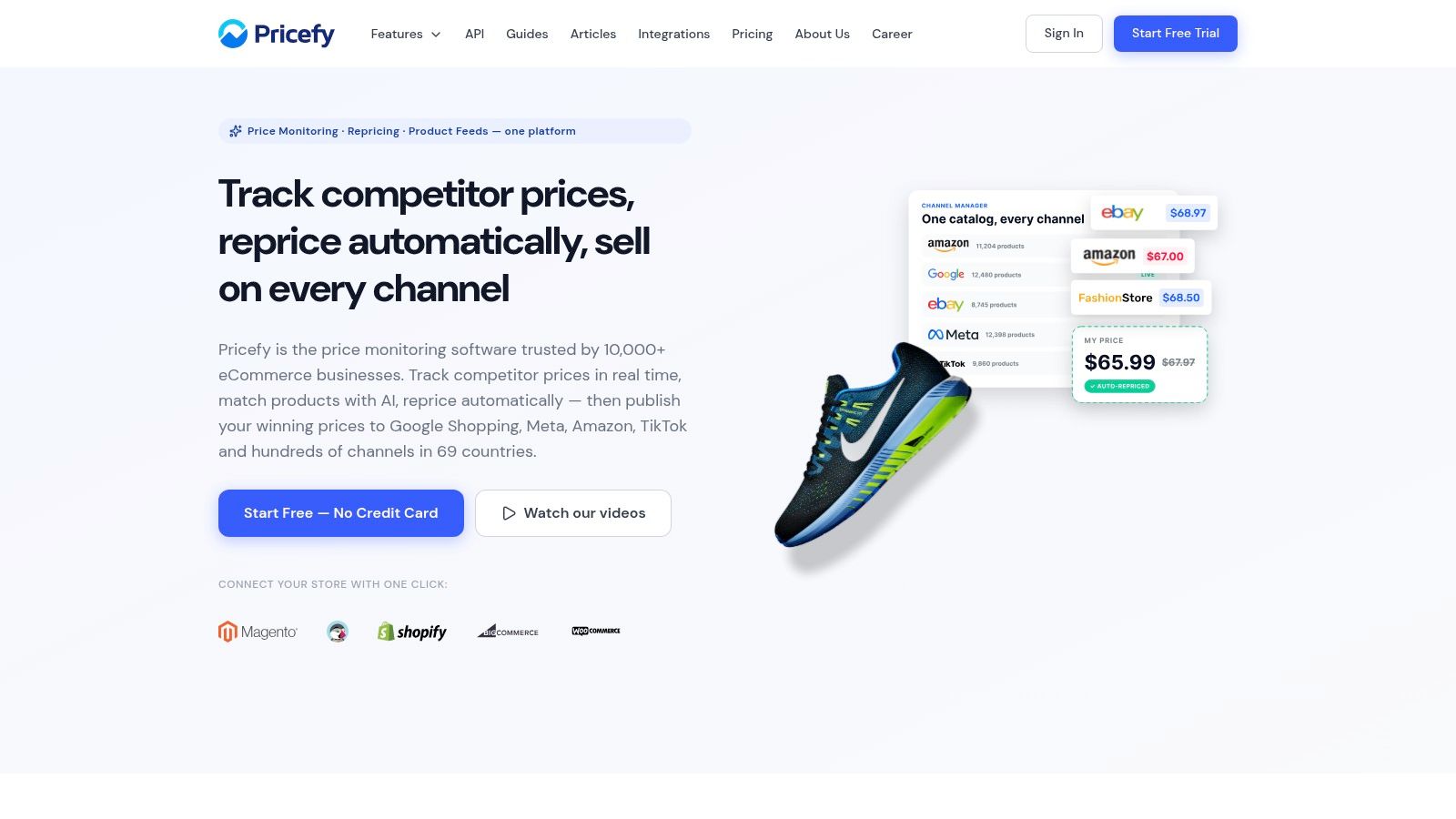
Pricefy is the accessible starting point for a store that wants to test monitoring, matching, and repricing together. Pricefy offers a free tier and published paid plans, with integrations for Shopify, WooCommerce, Magento, and BigCommerce.
That combination lowers the barrier to a meaningful pilot. You can evaluate the workflow around your existing catalog instead of designing a separate data-delivery process before anyone sees a useful comparison.
Test the Matching Before the Automation
Its AI-based matching and competitor discovery deserve scrutiny on products that don't have clean identifiers. Similar names can hide differences in size, bundles, accessories, or warranty coverage.
- For discovery: Check whether suggested competitors serve your customers and markets.
- For matching: Review ambiguous variants rather than judging the system only on identical branded goods.
- For repricing: Set floors and ceilings that reflect your margin rules, not just competitor positioning.
Published tiers make commercial comparison easier, but SKU limits, competitor limits, and feature eligibility still determine the usable scope. Confirm which plan includes the repricing and brand-monitoring capabilities you need.
Pricefy's strength is putting common e-commerce tasks within reach of a smaller team. Its limitation is the same focus: it isn't a substitute for customer-specific B2B deal analysis or a complex enterprise pricing program.
I'd use the initial evaluation to measure how much review work the tool removes. An inexpensive subscription isn't inexpensive if the analyst still has to correct every important match.
4. Competera
Competera belongs on the shortlist when the decision extends beyond whether to match a competitor. Competera's pricing platform covers regular pricing, promotions, markdowns, clearance, and new-item pricing through rules, demand intelligence, and scenario analysis.
That broader scope matters when a retailer must balance inventory, profitability, and demand across an assortment. It also changes the implementation burden: a useful model needs suitable internal sales and product information, not merely a feed of external prices.
Buy the Decision Process, Not Just the Model
Competera offers no-code pricing rules, elasticity modeling, what-if analysis, and experimentation capabilities. These are relevant when pricing managers need to compare strategies before publishing changes.
The adoption gap remains important: in a survey of U.S. retailers, 64% considered pricing and promotion optimization critical, while 34% had a price-optimization solution, according to RELEX Solutions. Recognizing the need doesn't mean an organization has the data ownership or operating process to support it.
- Strong fit: Retailers managing interconnected regular-price, promotional, and clearance decisions.
- Weak fit: Teams that only need competitor alerts or a spreadsheet export.
- Commercial trade-off: Sales-led pricing requires a scoped evaluation rather than an immediate self-service purchase.
Before a demonstration, separate demand-driven decisions from competitor-following rules. This guide to retail competitor pricing helps define where external observations should inform the strategy without becoming the strategy.
5. Omnia Retail
With Omnia Retail's price-management software, the central question is how market intelligence becomes an operational price change. The platform combines competitor monitoring and matching with pricing rules, recommendations, and execution.
That connection is useful for retailers and brands working across channels or markets. Rules can incorporate margins and stock alongside competitive prices, while explanations and an audit trail help teams inspect why a recommendation appeared.
A repricing system should be able to explain why it changed a price, which inputs it used, and which guardrails prevented a different decision.
The difficult work is defining rule precedence. A competitor-matching rule shouldn't override a margin floor, and an unavailable competitor offer shouldn't automatically trigger a defensive discount.
Scope the Execution Work
Custom pricing means buyers need a sales conversation, but the proposal should distinguish market-data coverage from price-execution scope. Include integrations, matching setup, rule configuration, and ongoing exceptions in that discussion.
Ask the vendor to demonstrate a rejected recommendation as well as a successful one. Seeing how the system handles missing observations or conflicting rules reveals more than a clean automatic-pricing example.
Omnia makes sense when the team wants monitoring connected to execution. If analysts only need recurring competitor reports, the additional configuration and governance may exceed the value they'll use.
6. Minderest
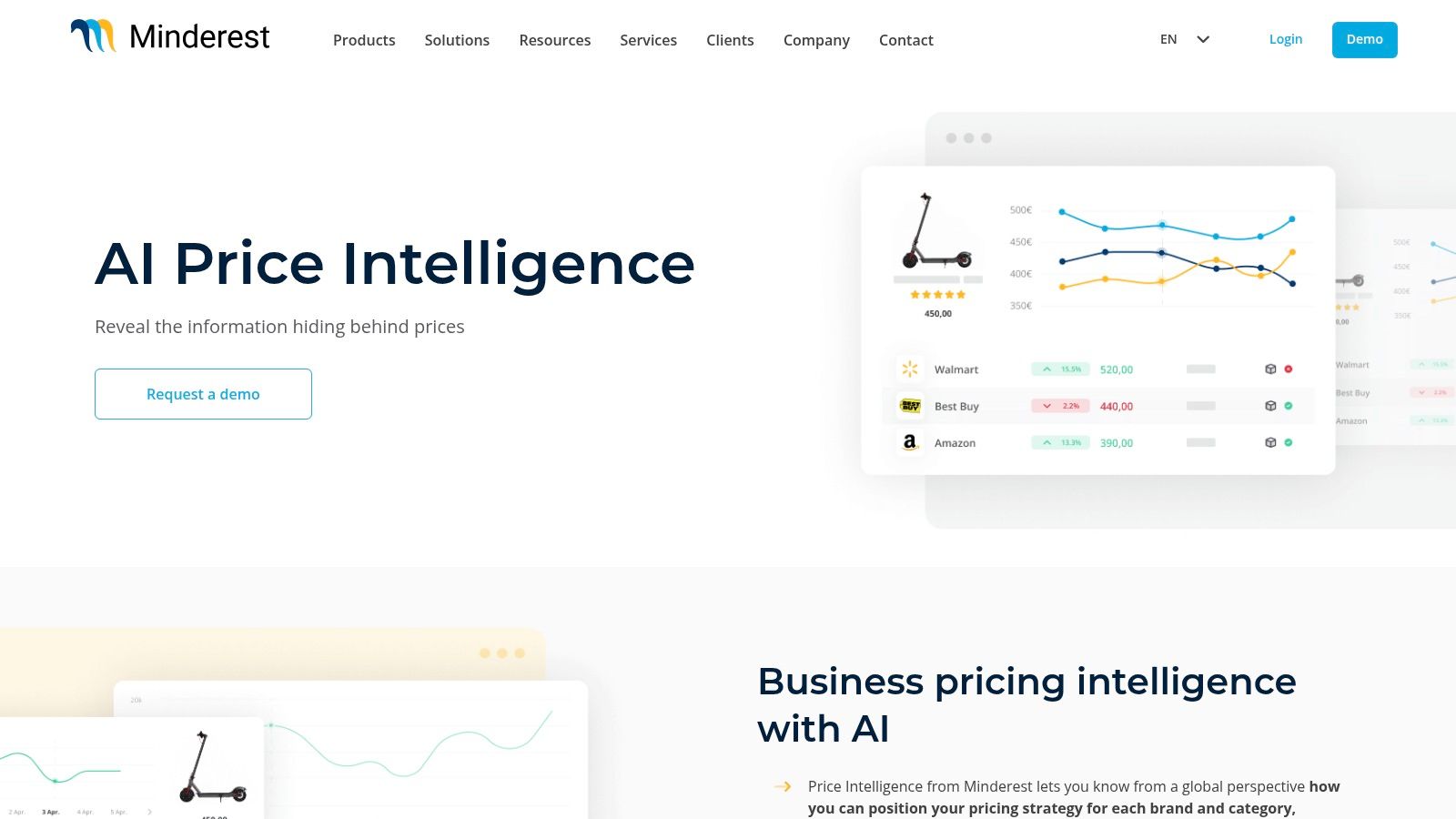
Private-label comparisons expose the limits of barcode-only monitoring. A retailer may need to compare functionally similar products even when no shared product code exists.
Minderest's price-intelligence platform supports identical, similar, and private-label matching, alongside market-position reporting and dashboards. That makes matching methodology a central buying criterion, not a minor setup detail.
Distinguish Exact Matches From Alternatives
An exact branded-product match and a comparable private-label product shouldn't enter the same pricing rule without qualification. Ask whether the delivered records preserve the match type and enough attributes for analysts to understand the relationship.
- Dashboard workflows: Useful for category managers investigating market positioning.
- API delivery: Relevant when BI teams want competitor observations inside their own reporting models.
- Related products: Dynamic-pricing and optimization offerings provide a possible expansion path, but should be scoped separately.
Minderest's main platform requires a demonstration and quote rather than a straightforward public subscription comparison. Evaluate the cost of building and maintaining the matched assortment, not just the recurring data service.
For an API-led deployment, inspect a sample payload before signing. Confirm identifier stability, timestamps, stock representation, and how changed matches appear downstream.
Minderest is a retail intelligence option, not a B2B quote-management system. Its value depends on whether its comparisons reflect how customers choose between your products and competing alternatives.
7. Wiser Price Intelligence
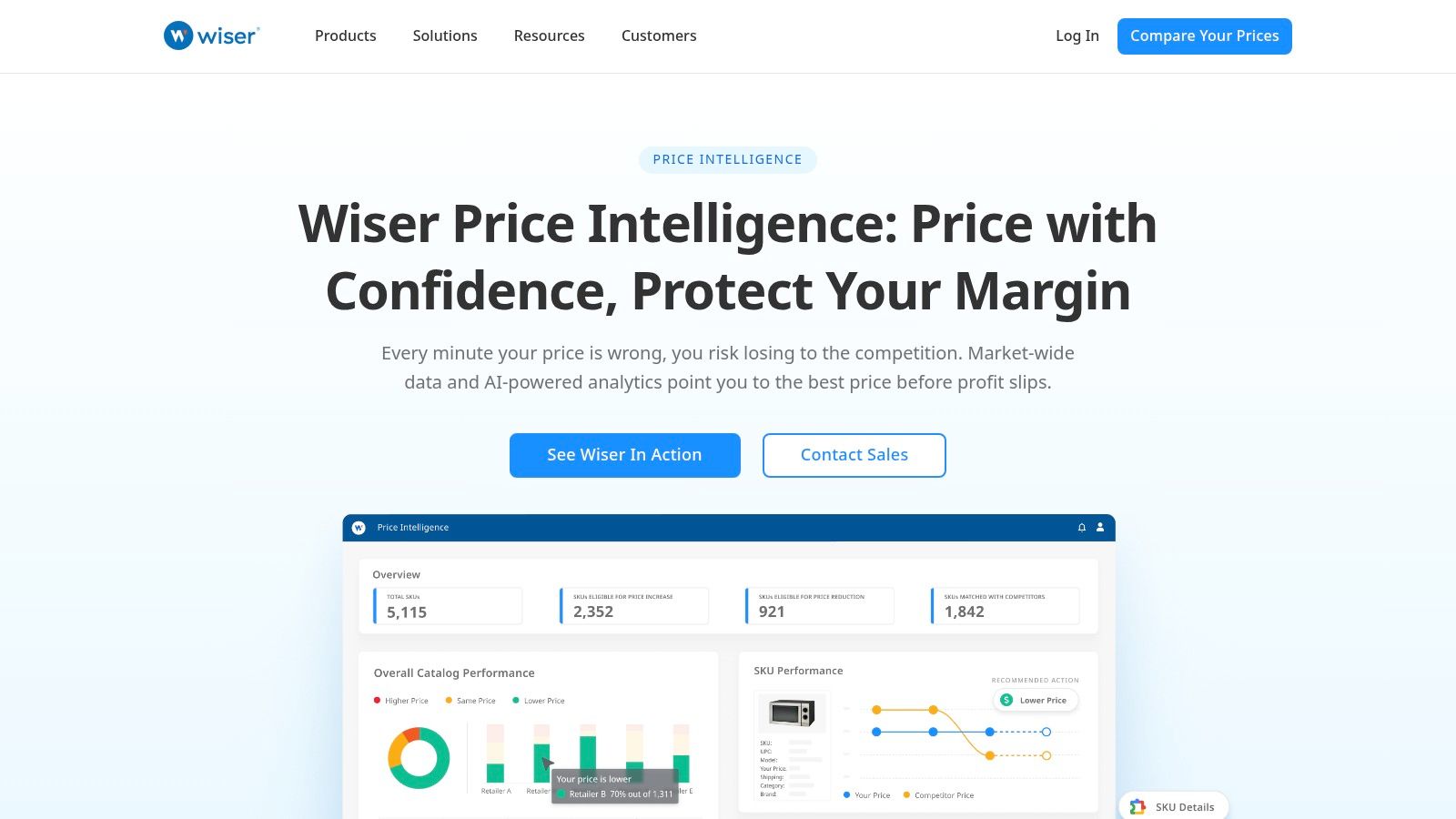
Choose the delivery workflow before evaluating the dashboard. Wiser's pricing offering supports price-intelligence delivery through dashboards, reports, CSV, APIs, or webhooks, with scope configurable around products, retailers, and geographies.
That flexibility matters when category managers and data engineers need different interfaces to the same observations. A useful dashboard doesn't automatically imply a useful feed, and a feed doesn't automatically include every field visible in the portal.
Inspect the Integration Contract
Ask for representative records containing product identifiers, seller details, observed prices, availability, and collection timestamps. For webhooks, establish how consumers handle retries and duplicate deliveries; for files, establish how corrected or late records arrive.
- Analyst advantage: Reporting interfaces can reduce the need for custom exploration tools.
- Engineering advantage: Multiple delivery formats can fit an existing BI or data-platform architecture.
- Commercial limitation: Sales-led pricing makes refresh cadence and coverage part of the negotiation.
The Chrome extension can support in-browser checks, but recurring intelligence requires a repeatable delivery process. Don't confuse an analyst's ability to inspect a page with dependable production ingestion.
A guide to competitor price intelligence helps define what your downstream users need. Take that specification into the evaluation and ask Wiser to demonstrate matching quality and freshness on your intended retailers, not a convenient sample catalog.
8. Intelligence Node
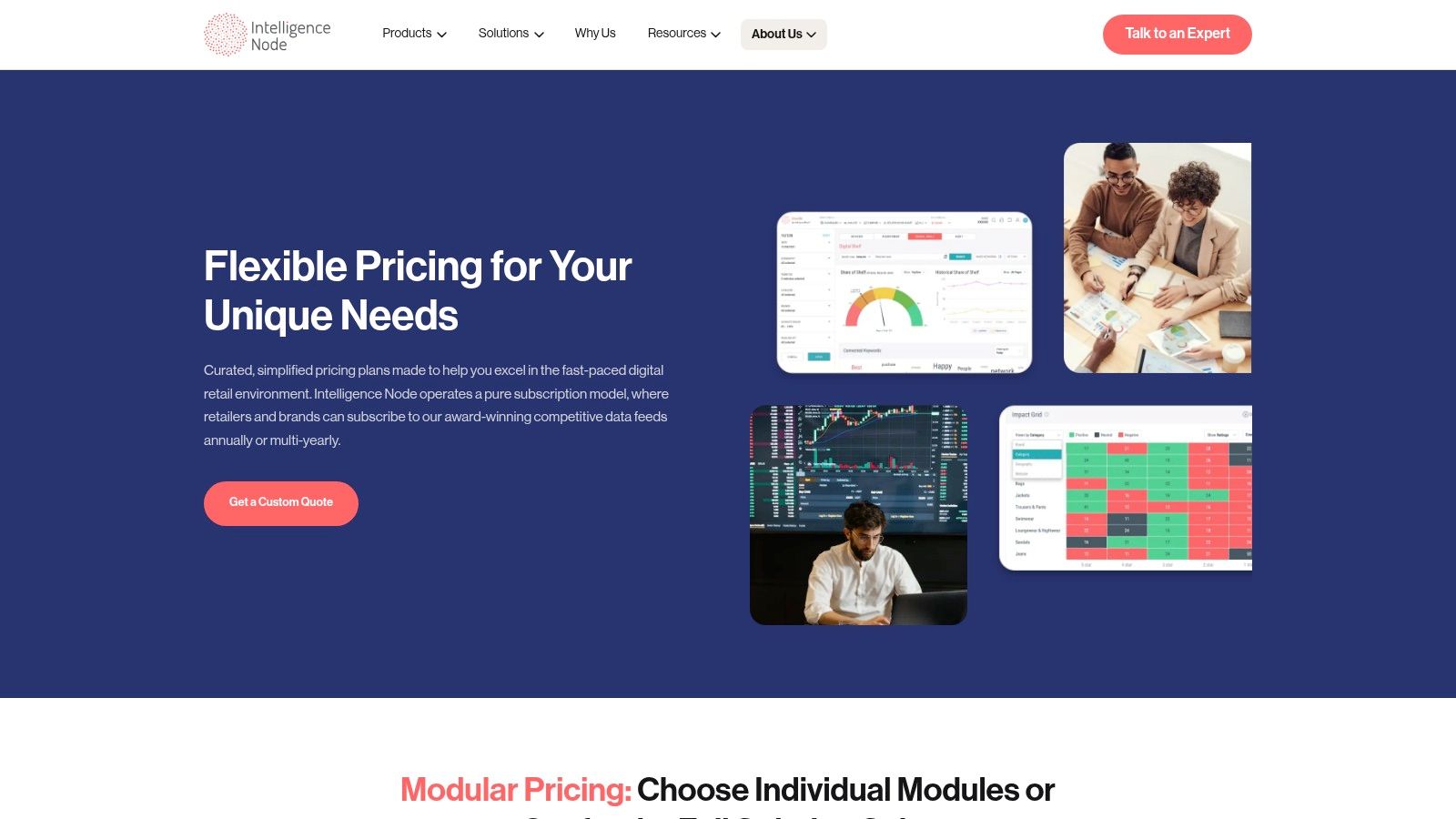
Intelligence Node is an enterprise retail-intelligence purchase, not a lightweight monitoring subscription. Its scope combines price benchmarking with assortment, MAP, and digital-shelf capabilities.
Intelligence Node's pricing page describes configurable projects and delivery through a SaaS portal, APIs, or file transfer. That gives larger organizations options, but it also makes the statement of work particularly important.
Define What the Project Includes
Modular scope can prevent buyers from paying for analytics they won't use. It can also make proposals difficult to compare unless the catalog, competitors, markets, delivery method, and refresh requirements are explicit.
- Matching scope: Separate exact-product matching from similar-product comparisons.
- Delivery scope: Confirm whether the portal, feeds, and API expose equivalent records.
- Service scope: Document how newly added products and broken matches enter the maintenance workflow.
The platform is a candidate when pricing intelligence must coexist with brand compliance or digital-shelf analysis. It's less attractive when a small store wants alerts for a narrow competitor set.
Treat vendor accuracy and freshness claims as hypotheses to test. Include difficult variants, marketplace sellers, unavailable products, and changing promotions in the evaluation set.
The hidden cost isn't only implementation. Internal teams must still own product definitions, exception review, and the decisions made from the feed, even when the vendor manages collection and matching.
9. Pricefx

A distributor setting customer-specific prices has different needs from an online store monitoring public offers. Discounts, rebates, approvals, and negotiated terms can make published prices a poor guide to the actual deal.
Pricefx supports pricing analytics, price setting, optimization, quoting, promotions, and rebates. Its modular cloud platform is aimed at B2B manufacturers, distributors, and larger businesses, rather than teams focused only on competitor monitoring.
Map the Commercial Workflow
Start by mapping how CRM, CPQ, ERP, and commerce systems exchange pricing data. Define which system owns customer records, approved prices, transaction history, and publication before configuring optimization.
- Analytics: Find pricing performance issues and opportunities.
- Controls: Govern changes with rules, simulations, and approvals.
- Execution: Send approved guidance to the systems sellers use.
Legacy-system integration can complicate implementation, so scope it early. Identify required data flows, integration work, configuration, and ongoing administration before comparing proposals.
Pricefx uses a sales-led evaluation, with no standard public subscription price for a simple comparison. Request a phased proposal that separates software modules from implementation work, and confirm what each phase delivers.
For a small shop that needs competitor tracking alone, the platform's broader scope may be excessive. For a business managing governed prices across sales channels and customer relationships, the value depends on connecting analysis to the commercial workflow. That fit, and the work required to achieve it, matter more than a feature list.
10. Zilliant Price IQ
Zilliant Price IQ is for businesses whose prices depend on the customer, product, or segment. Zilliant's Price IQ analyzes business pricing data to recommend prices and compare strategies through margin, revenue, and volume effects.
The relevant comparison isn't whether it tracks more competitor pages than Prisync. It's whether pricing managers can turn transaction history and commercial strategy into guidance that sales teams can use.
Implementation test: Ask a sales manager to explain a recommendation using the information the platform provides. If they can't defend it, publication alone won't produce adoption.
Scenario analysis helps teams assess different objectives before selecting prices. Publishing options into CRM, CPQ, ERP, and e-commerce systems connect that analysis to commercial execution.
Start With Usable Transactions
Transaction records need to represent meaningful commercial outcomes. Returns, exceptional deals, rebates, freight arrangements, and inconsistent customer identifiers deserve attention before the team interprets a recommendation.
Evaluation and pricing are customized through the vendor, so require a clearly defined initial scope. Include data preparation, segment design, publication, and ownership of future changes.
Zilliant is a strong category fit for negotiated B2B pricing, but it isn't a lightweight competitor-price tracker. Choose it because you need customer-specific guidance and measurable commercial trade-offs, not because an enterprise platform appears more complex than a monitoring service.
Pricing analysis software compared
| Item | Starting price | Pricing transparency | Best for |
|---|---|---|---|
| Prisync | Published plans | Published plans | E-commerce competitor monitoring |
| Price2Spy | Not stated | Plan-dependent, contact vendor | Competitor price and product-page tracking |
| Pricefy | Free tier; published paid plans | Published plans | Online stores seeking monitoring and repricing |
| Competera | Custom quote | Sales-led | Retail pricing and promotion optimization |
| Omnia Retail | Custom quote | Sales-led | Multi-channel retailers automating pricing |
| Minderest | Not stated | Demo and quote required | Retail price intelligence and product matching |
| Wiser Price Intelligence | Custom quote | Sales-led | Brands and retailers needing configurable market data |
| Intelligence Node | Configurable project pricing | Enterprise sales-led | Large retailers needing price and digital-shelf analytics |
| Pricefx | Not stated | Sales-led; no standard price published | B2B pricing analytics and workflows |
| Zilliant Price IQ | Custom quote | Sales-led | B2B companies with customer-specific pricing |
The table separates self-service monitoring from enterprise retail intelligence and B2B pricing platforms. Published plans make entry costs easier to compare for some e-commerce tools, while sales-led products require a scoped quote. “Not stated” does not mean free; confirm the commercial model directly.
Price alone does not show the full cost of deployment. Product matching can require catalog cleanup and exception handling, while API access, exports, and integrations may affect how teams receive and use pricing data. Ask vendors to specify those costs and delivery options alongside the subscription or project fee.
Choosing by Buyer Type, Not by Feature Count
The fastest route to a useful shortlist is to identify which buyer type you are. A small-to-mid e-commerce team should start with Pricefy, Prisync, or Price2Spy, where published plans or trials make the initial evaluation more accessible.
Multi-market retailers needing matched external data should evaluate Omnia Retail, Wiser, Minderest, and Intelligence Node. Add Competera when the central requirement includes demand-aware regular pricing, promotions, or markdown decisions rather than market observation alone.
Match the Purchase to the Decision
B2B organizations with negotiated prices belong with Pricefx or Zilliant. Their evaluation should focus on transaction quality, customer segmentation, approval workflows, and publication into commercial systems, not the breadth of competitor-page coverage.
Before any demonstration, write down your catalog scope, target refresh frequency, markets, and matching requirements. Require vendors to validate their claims against your products, including difficult variants and conditional offers, rather than accepting a polished demonstration on easy matches.
Compare total ownership cost through concrete work:
- Data setup: Catalog cleaning, product matching, retailer onboarding, and exception resolution.
- Delivery: API entitlements, exports, webhook behavior, retention, and historical backfills.
- Execution: Integration, approval rules, rollback procedures, and ongoing administration.
A public subscription price answers only part of the purchasing question. An enterprise quote should separate recurring access from implementation and maintenance so you can compare equivalent scope.
Validate Outcomes Beyond Faster Repricing
Keep the pilot in observation or approval mode before enabling automatic changes. Inspect incomplete records, stale observations, and rejected recommendations, because those cases reveal whether the system can support defensible decisions.
Customer response belongs in that evaluation too. A 2025 survey of 303 U.S. consumers found that 68% felt dynamic pricing meant they were being taken advantage of, as reported by Consumer Goods Technology.
That finding doesn't mean every price change damages trust. It does mean margin analysis should sit alongside complaints, cancellations, conversion, and customer retention, rather than treating immediate revenue as the only outcome.
Choose the smallest platform that can support your decision process and data-delivery requirements without forcing critical work into spreadsheets. A dependable monitoring feed with clear ownership can be more useful than advanced optimization running on uncertain matches.
We offer a web data access API for collecting e-commerce product prices, availability, reviews, and inventory from modern websites. Visit Scrappey to test the collection layer for your pricing analysis workflow using your own competitor pages before committing to a broader monitoring or optimization architecture.